I have been giving a lot of thought in recent years to the prevailing food system and the price of food, with the call for cheap food a frequent narrative, and I keep arriving at the same question, at what cost?
As is most often the case, we haven’t arrived at our present position in one giant leap, instead it has come about through thousands of incremental steps, and each one likely didn’t present an immediate issue or at least enough to cause alarm, but collectively we appear to have taken quite a few wrong turns, many of which are only apparent with hindsight. Now that we have the hindsight and the data to qualify it, in our landscapes, animal welfare and our healthcare, it is time to ask different questions and vote for the changes that are necessary when purchasing our food, if not for our own sake, for that of the generations who will follow.
Being creatures who typically don’t favour change, voting for regenerative and organic farming, high animal welfare and investing in our health through simple changes in our shopping basket, is perhaps the most effective way to achieve this and puts us directly in control of the outcomes.
If we could see the impact of our choices at the time of purchase, selecting a product primarily on price, would we knowingly destroy habitats, would we knowingly pollute our water systems, would we knowingly subject animals to mass production factory conditions, would we knowingly exploit communities who often get paid very little and sometimes less than the cost of production for the food they produce, and would we choose foods that our body doesn’t recognise resulting in all manner of escalating health conditions?
The truth is, the way the vast majority of food is produced and marketed we are not invited to consider these things. Quite the opposite, we are faced with a wall of ultra processed foods, wrapped in all manner of confusing messaging that suggests they contribute one of our five a day, or are plant based, or grass fed, or meeting any number of other standards and criteria and yet the majority contributes little towards the nourishment we need. Worse, it is most often positively detrimental to our health, but it is great for the balance sheet which has become the ultimate measure of success. In his book Ravenous, Henry Dimbleby asserts that in the UK in 2010, of the 17 largest food companies that year, 85% of their offering fell into the ultra processed food category. This is the wall that the customer is having to navigate in making better choices. All hail the measure of GDP.
This is big business and so is the healthcare that is increasingly working to try and deal with the repercussions, the supplements that are seeking to replace those missing in our food, the alarming rise in autoimmune conditions, in diet related illness such as Crohn’s, type 2 diabetes, obesity and increasing evidence to suggest dementia may be directly linked to our diets too. Then comes the medication that seeks to deal with the symptoms. This comes at a significant cost to the individual and the community, and this is before we factor the impact of lost work hours to staff illness.
I think it was Einstein who suggested ‘you cannot solve a problem with the same mindset that was used to create it’, and with staggering profits to be made, little is done to consider the very real impacts of the system we have created, instead these are business opportunities and we develop another commercially lucrative solution to solve the problem, one where the business making the money often isn’t held accountable for the environmental damage, for the habitat loss, the pollution to water systems, those are costs for the community to pick up.
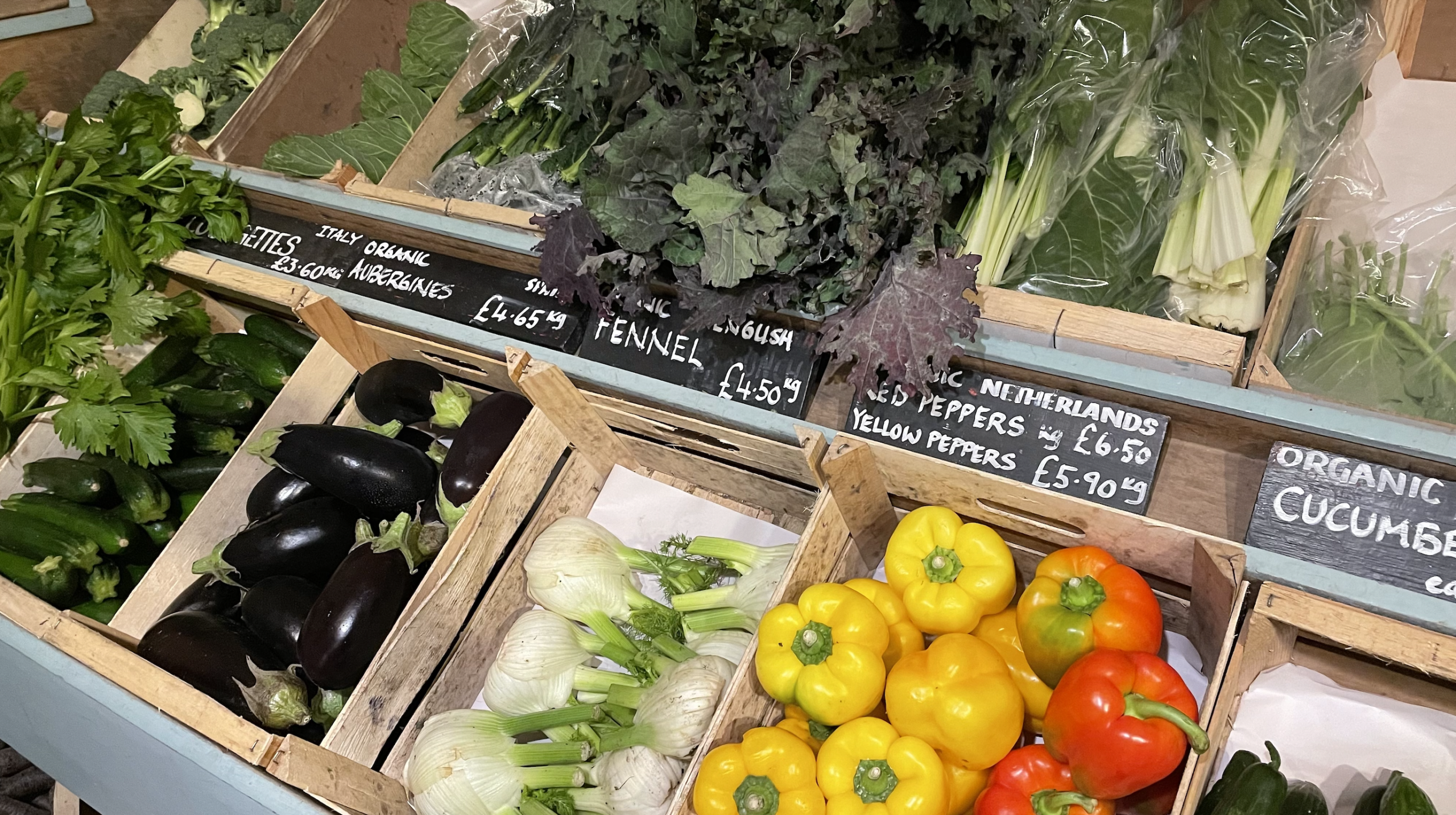
The reality is that the foods our bodies need are simple, seasonal, free of chemicals, nourishing and packed with flavour and we are increasingly waking up to this, but we need to address the question of price, or more importantly cost, to free ourselves of these commercial trappings and repercussions.
Reading about how we arrived at the food system we see today, I learnt of the introduction of the Enclosures Act of the 1500’s, forcing communities off the common land, where they had typically sustained themselves in small scale, equitable systems of production and trade. Without land to sustain themselves, these impoverished communities were given little option than moving to towns and cities in search of work, typically finding low paid jobs, with the food available to them for their budget resulting in a less diverse and nutritious diet. What was once an exchange of their time, working in nature in return for their sustenance, was now exchanging the same or more time, in less desirable working conditions and for less return. And so began the demand for cheaper food and greater profits, not necessarily driven by the customer, but a supply chain controlled by the same landowning elite who were investing in the scaling of arable crops on their newly acquired land and protected by law against imports of competing product, until that is they invested in their production outside of the UK, and then the law was adjusted accordingly. The community who were previously producing their own food, were now consumers at the mercy of a food system.
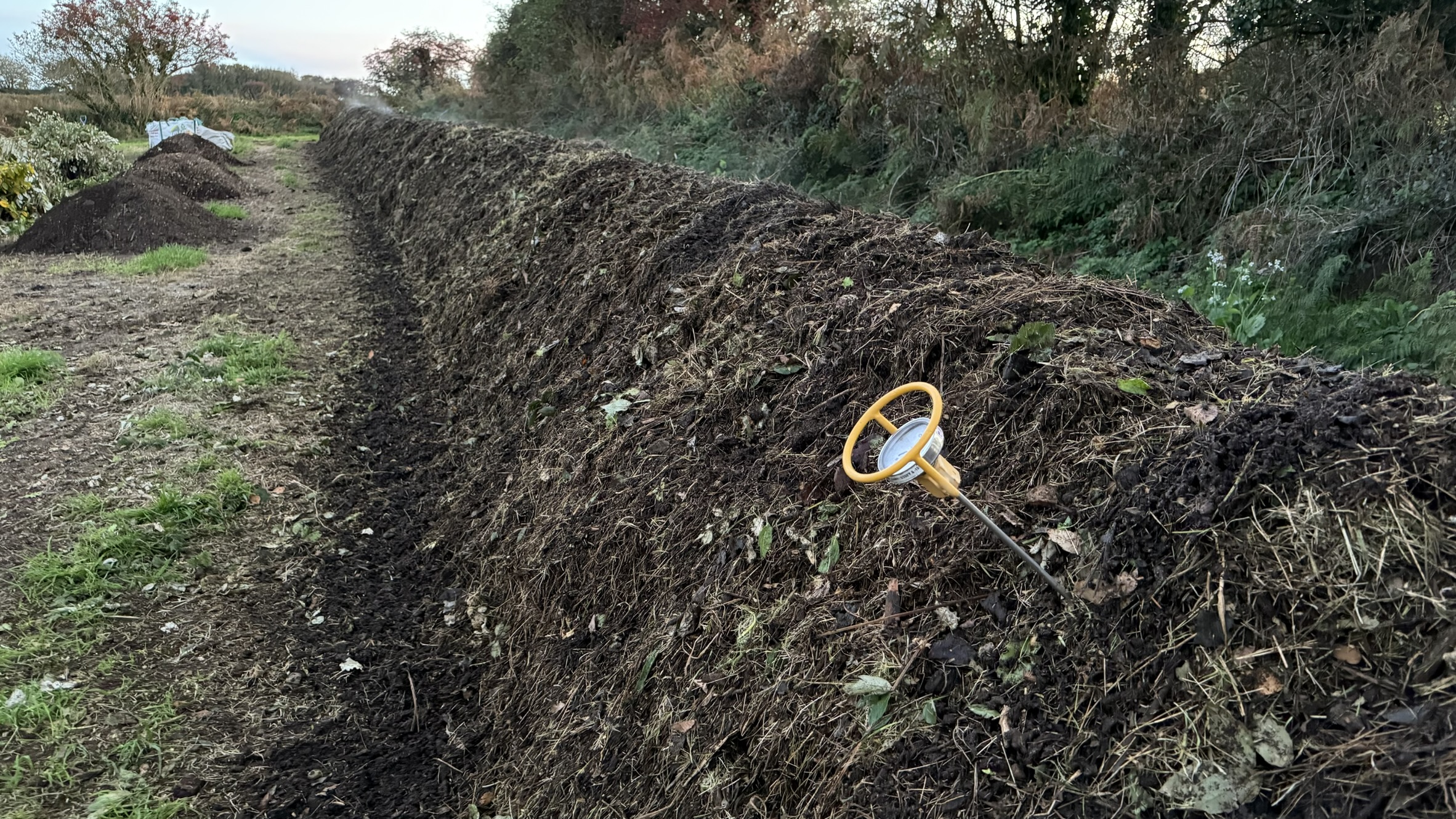
The cost of this development was an intensification of land management practices that started the depletion of our soils and the loss of habitats, seeking to optimise output and profits. This has only intensified with greater mechanisation and technology advances, resulting in significantly less diversity in all measurable parameters. Our pioneering in industry, the pursuit of profit and GDP as the primary goal, came at a direct cost to our land and our nutrition.
Fast forward to a post world war two era and the acceleration of ground disturbance and the introduction of synthetic fertilisers and then pesticides, in direct response to a desperate need for food and a significantly depleted workforce. It is easy to see how what is now referred to as conventional agriculture was lauded as the green revolution and embraced, especially by those who stood to profit most and the policy makers supporting their efforts. There were warning signs such as the dust bowls in the US, or simply the birds not following the tractors as they ploughed the fields, they knew what was going on, but the need of the country was greater.
This sustained progress, or if we call it what it is, the pursuit of profit, has resulted in cheaper food, food that is a shadow of what it was, and which has consistently been achieved at the expense of something else. Be that the farmer getting paid much less for his product, likely carrying significant debt and risk, under increasing pressure from the stranglehold of a select few retailers who control more than 90% of the food we eat. The land which is being managed extractively, reducing its ability to function to the same standards year on year without more costly inputs. Biodiversity, the flora and fauna, including the soil biology that we don’t see plying their trade underground, under consistent attack from intensive machining and synthetic applications. The environment, including soil erosion and water pollution. The list is long, but it is worth remembering that in real terms it takes the same time and energy to make a carrot today as it did in 1500, so if we have made it cheaper and someone is making a lot more money, then there are a lot of things being squeezed in the process.
So if food production is one of the biggest and most profitable industries on the planet and yet it commands considerable subsidies from governments to sustain it, those will be subsidies paid by taxes, the question has to be why? Why are we subsidising an industry that is generating significant profit and benefiting very few?
What if we were to switch that around and provide rewards for best practice to motivate farmers to adopt principles that encourage positive environmental outcomes, in balance with nature and that create nutrient dense food? What if we invested in local food infrastructure and became less reliant on extractive globalised solutions, ensuring more of the money spent on food went to those producing it and stayed in local communities? What if spending a little more money up front in our values based local food systems helped to mitigate global environmental impact and I would argue significantly improve many issues in social and community issues too? What if to make this more equitable we employ methods to subsidise the cost of healthy local food, without asking the farmer, the environment or our water and wildlife to pick up the tab?
I don’t believe our food system has to be this way and there are thousands of people like me globally speaking up and better still, doing something about it, creating the systems of change that are needed to feed the next generations with a different outcome. We all have the ability to vote differently every time we make a decision regarding food, it is the pound in our hand, and if we can afford it we can pay it forward to help those whose budgets make that choice more difficult as we are simply helping them to vote for the same outcome if minded to do so.
What if the way we priced our food wasn’t based on a price per kg, but was priced based on nutrient density? I suspect that would result in the best quality food suddenly looking cheap. What if the companies profiting most from cheap food had to also pick up the bill for the consequences of their business activity in pollution, soil degradation and community healthcare, what would that do to the price on the shelf?
My gran was full of quoted wisdom, and the older I get the more often the little gran on my shoulder pipes up and rings true, she would often suggest that you know the price of everything and the value of nothing, and that statement makes so much sense now when applied to the food system we are presented with.
So I come back to the question, cheap food, but at what cost? Every pound you spend on food is a vote, spend it wisely.
Jock – The Soil Farm