I love making Compost, it is one of my favourite things to do. Not just because it means being outdoors, getting a bit mucky, engaging with nature and affording me valuable headspace, but also because it is stimulating and rewarding. It is complex science in action, an alchemy of ingredients that create something far greater than the sum of its parts. Nature Lasagna as I like to call it.
But why make Compost? Well there are many reasons for that and you might think it is about breaking down waste materials over time to add them back into the system, and you wouldn’t be wrong. But when Compost is at its optimum, the resulting organic matter is for me a happy byproduct, it is secondary to the farming of soil microbiology, billions of diverse organisms that make up a healthy soil eco system, and it is this which makes Compost so important and engaging.
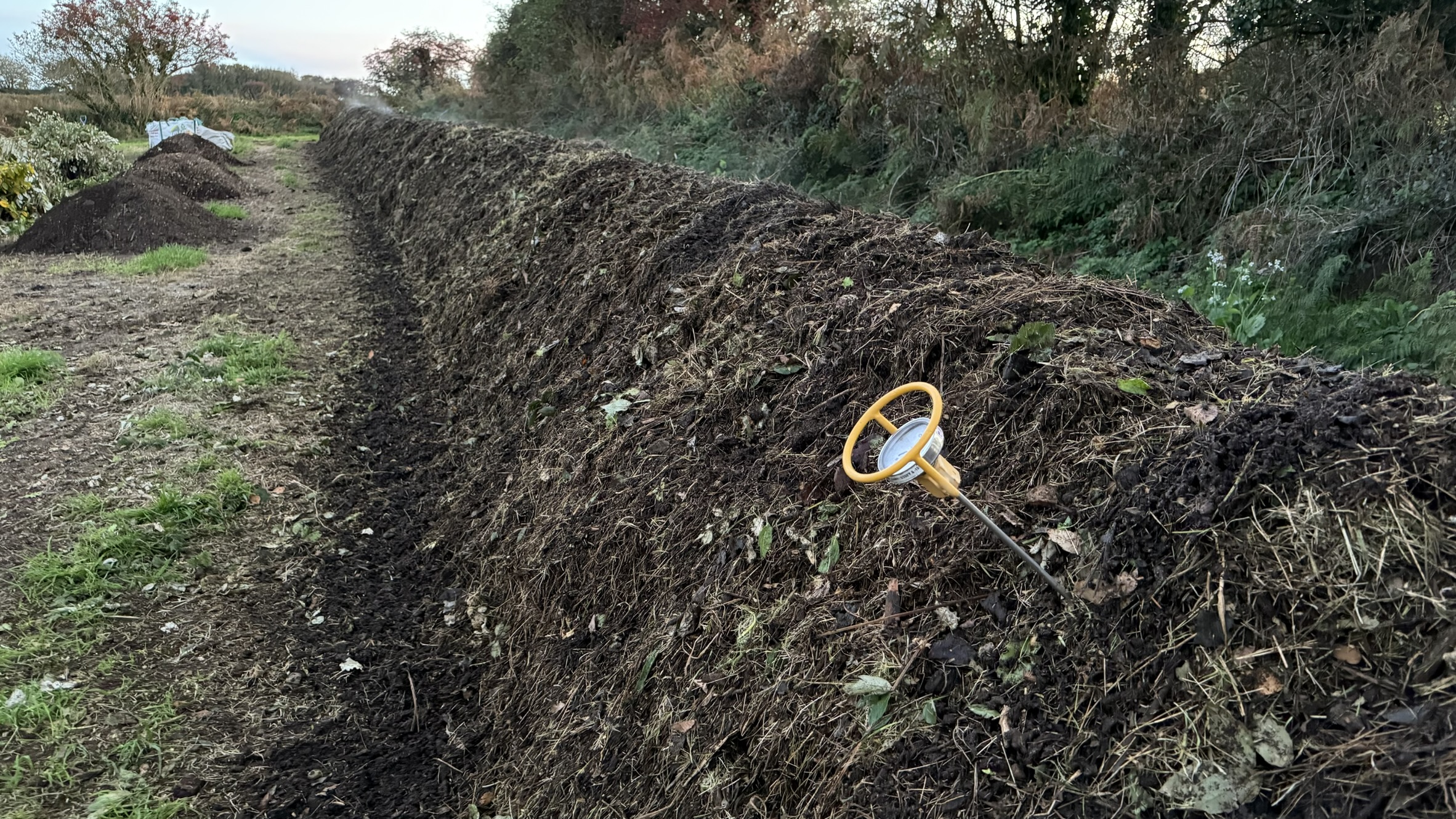
Having started making Compost at a scale you could hug, one step up from tree hugging, I am now working at a scale of 100 cubic metres or more each time I build, but the process remains the same. Mixing carefully selected natural waste products, such as grass clippings, hay, woodchips, coffee grounds, manure and vegetable waste, ensuring aeration and moisture and managing the resulting activity to keep the pile hot, turning it on a regular basis to make sure all material goes through the core. I employ a rule of ‘diversity in, means diversity out’ and typically work with at least 10, but often 15 or more ingredients in my mixes, making sure the appropriate balance of carbon and nitrogen is maintained.
It takes a minimum of 15 days through temperatures between 55 and 75 degrees Celcius to ensure any weed seeds and pathogens are eradicated, and the accelerated breakdown has really gotten underway, although the pile will often stay hot beyond 30 days. It is in this phase where the many ingredients quickly blend and transform into the rich dark organic matter that resembles a finished compost product. Most are surprised at the speed of change when a compost is active like this, considering the slowly rotting pile of material that many have at the bottom of the garden.
Then, as ambient temperatures return, the pile is managed to retain good aeration and moisture and to mature the material, which takes a good 6-9 months for the full breakdown and development to occur. It is during this period of slower maturation that the microbial life in the Compost literally explodes. Studying the material under a microscope confirms the material is teeming with huge diversity and density of life, ready to be reintroduced to the soils we manage.
And this is where the flavour comes in. I am not talking about eating Compost, or drinking Compost tea, but when we reintroduce this abundance of biology to our soils, literally in their billions, they will seek out a home, looking for a relationship with plants whose roots systems penetrate the soil.
The deal is simple, and yet hugely complex. The plants gather sunlight through photosynthesis, creating sugars to help them build structure and grow, but they only use about 50% of the sugars they make, the rest they send down through their root systems, making it available to the soil biology, in fact selectively designing the biological population around their roots to ensure they have access to all that they need to thrive. In turn, the soil dwelling billions have been busy mining minerals and nutrients, they all have their functions, and in conjunction with fungi they make this into a plant available, ‘all you can eat’ buffet.
The plants and the biology work together to share resources and to thrive in a symbiotic relationship. It is this transfer of minerals and nutrients from soil to plant, in exchange for sugars from plant to soil that creates a healthy plant and a thriving soil biology, with the plant selecting exactly what it needs and when for health, vigour, resilience and disease resistance.
In conventional farming systems where we typically override, and in large part eradicate, these natural systems through soil disturbance and use of synthetic fertilisers and pesticides, we feed plants a limited supply of nutrients and inputs to reach their harvest, akin to trying to thrive on a fast food diet with a drug addiction.
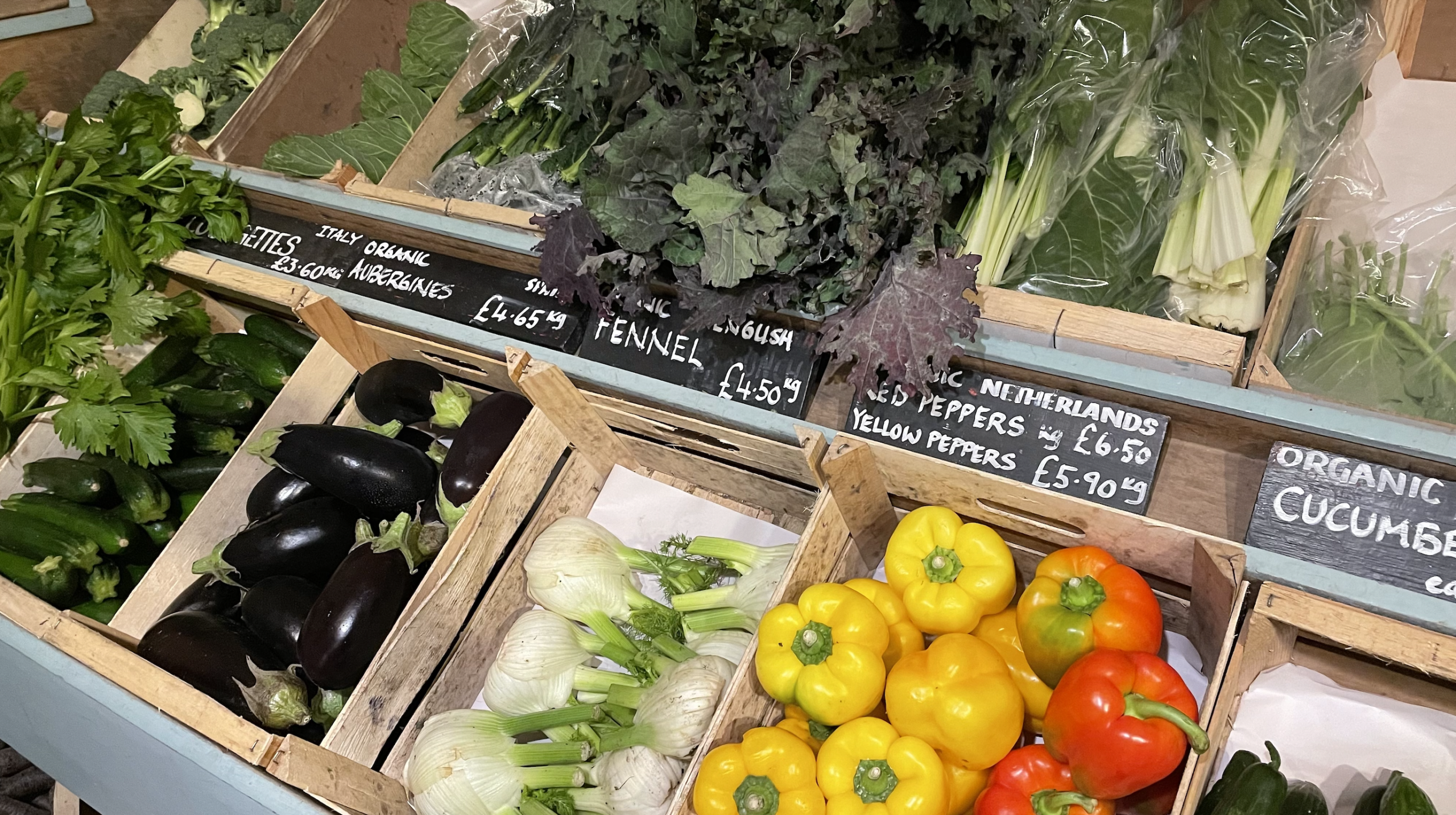
Unsurprisingly the plant doesn’t have much going on, and precious little to offer us when we eat it, but we can make it cheaply, albeit your taste buds know they are being cheated, you must have bitten into a ripe red tomato and tasted nothing? It happens so often in our globalised food system we are becoming accustomed to food without flavour, often replaced in a similar fashion with a range of salts and sugars. Much like the plants, we then rely on a plethora of additional inputs and interventions in order to deal with the symptoms. The cumulative result is also far from cheap. It is very profitable to create food and supplements this way, but it does not offer nourishment and for me it doesn’t equate to enjoyment either.
As suggested nature tends to do infinitely complex with ease, complex, but not complicated, and we should remember we are an integral part of nature, one with a 10,000 year old design that is optimised for seeking out the food that will sustain us. Our taste buds are a finely tuned measurement of flavour, noting that when a plant is packed full of the minerals and nutrients that it collated over time to thrive, we can taste it, that tomato suddenly explodes with so much flavour that we salivate, waking up our own biological eco system in our guts that will do the same for us in making mineral and nutrients available, as the soil dwelling biology do for the plants.
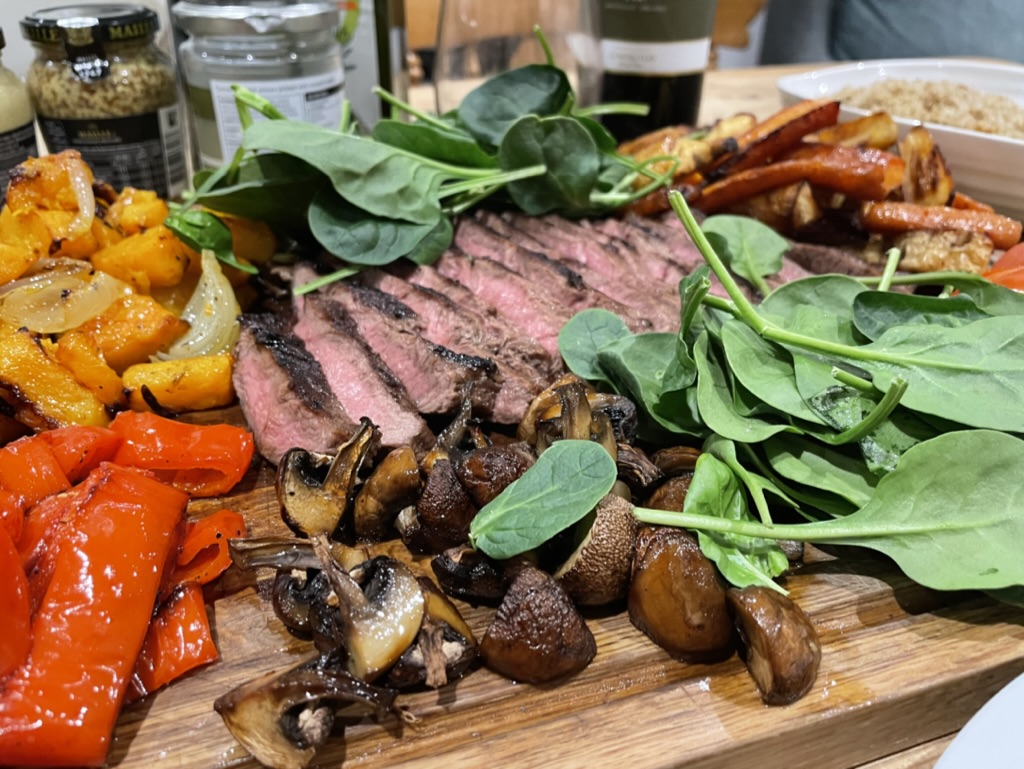
So my time Composting, is not only mindful, exposing me to nature’s rhythms, but it is actively farming the microbiology that will feed the plants, in landscapes that so often sorely need the help to restore their function, which will in turn feed me, my grazing farm animals, the wildlife and bugs, the birds and all else that inhabits the land, working together in one hugely complex, but not complicated pursuit of health, vigour and above all flavour.
Jock – The Soil Farm