Let battle commence, or better still let’s not, let’s look at the bigger picture and look for common ground, as I believe if we are asking the right questions, there is plenty we can agree on.
For me it is not about the choices I make about which food groups I eat, or that others choose to eat, or don’t as the case may be. If we focus our lens instead on how we source our food, we may just have more in common than the attention grabbing title suggests.
I suspect the primary questions being raised here are about sustainability, feeding 8 billion people, sentient beings, animal cruelty and more. I will leave aside the meat is murder narrative, the hippy lentils, the bloodbath and the rabbit food analogies, as these are some of the posturing that define the battle ground.
Every day I will see a ripped, muscular torso wielding vegan dude extolling the virtues of a dietary choice that determines one doesn’t need meat and their path is healthier, this is online of course and not in my kitchen wearing just a pinnie, and i see just as many ripped carnivore diet advocates suggesting the same, still online and not in my kitchen. Animals are sentient and we are conscious and if we combine these we ought to rise above, or I have incisors and a biological blueprint that is designed for meat protein to thrive. I could go on but I am back on the battle ground, seeking differences. I suspect different folk will benefit from different inputs and there isn’t a one size fits all dietary holy grail, but where might we align?
For me we can stand shoulder to shoulder, respect each other’s choices of carnivore, pescitarian, flexitarian, vegetarian and vegan… and we can define our alignment in a balance with nature, in animal welfare, in nutrition… ultimately the questions I think we should all be asking are how was the food I am about to eat produced? Where from? In what system? Ultimately the biggest question is how we source our food.
If you are asking me to join you in challenging a mass produced meat solution, where we are focussed on shaving off a few days of production time for profit, seeking intensive cost efficient process, for a uniform product that has a low cost on the shelf because we have to provide the poorest people in our community with chicken. I would argue that I should be actively protecting everyone from a £3 chicken, including the chicken. It is most likely 28 days old, pumped full of growth hormones and antibiotics, caged or reared in cramped conditions and full of cortisol, and likely more besides. Its nutritional profile is likely very poor too and our bodies will know this trying to ingest it, let alone the microdosing of the chemicals that are contained within.
The farmer will likely have seen very little of the shelf price either, pushing them to save costs in production at every turn. Let’s not do that, and for the record let’s not solve that problem with synthetic meat either, that is a wormhole for another day, with a whole load of unforeseen consequences that I can predict will not turn out well.
My point is if I was able to lift the lid on the packaging and you could see how cheap meat is produced… the likelihood is you already know, and I am not assigning blame here, there is a huge money making industry investing heavily in messaging and marketing to condition you to see otherwise… but if I was to remind you that when lifting the foil on that cheap 12 for the price of 6 pack of bacon, and you could see the true plight of the animal that achieved the product at that price, I am almost certain you would vote differently.
Let’s also lift the lid on the alternative proteins most commonly found in non meat products. Take soy production for instance, soy is of course much better than pork if we are focussed on animal welfare and the limitations of a planet trying to host 8 billion homo sapiens, or is it? When produced on the scale necessary to feed a growing number of vegans, you will most likely find large scale agriculture that has cleared huge swathes of habitat to create a monoculture production. Monoculture by definition requires that we eradicate the wildlife that would otherwise have occupied the land, and the competing plants, creating conditions where one plant thrives, except it doesn’t because nature doesn’t favour a monoculture, so most likely we will be exposed to toxic levels of fertilisers, pesticides, herbicides and fungicides and we will have killed thousands of animals in an effort not to eat an animal.
The other issue facing a growing vegan population is that those choosing this path will arguably be closer to the centre of the big food system cross hairs than the rest of us, industrial food manufacturers literally cannot do enough to convert people to veganism because it is a processed food profit heaven. Call it plant based, stick some great pictures, logos, clever wording and other qualifying criteria on the packet, and you have an even more profitable product than before, and one that is potentially harming more animals than a well sourced meat diet.
So my argument is that we should all be asking critical questions of how our food is produced, seeking a balance with nature and clean healthy nutrition that is sustainable. Unlike most animals who we share this earth with, and I think we often forget we are sharing it, their population will be in balance with the food system available to them… the number of barn owls will correlate with the numbers of voles and shrews, the number of worms will regulate to their food source too.
Mother nature has a great track record of being an incredible designer, presenting infinite complexity, albeit not complicated, and doing so in balance. I realise that we cannot do too much to regulate our population, nature might well have a say in due course, but until then we are responsible for our own choices and when we consider the mess we have been making of her resources that ultimately sustain us, we couldn’t argue if she dealt us a hammer blow.
But let’s take the principles that nature provides food for a given species in balance with their dietary needs to thrive and with the wider whole, and note that every animal has a natural function, even those we have bred over time into livestock rather than their natural cousins.
To the first point regarding function, if we employ animals in a regenerative farming system, in part seeking to make good the mess we have been creating and looking to improve the land’s ability to sustain us season on season, as well as producing a high quality meat, slowly produced without synthetics and full of the nutrients that are so often missing, nutrients that equate to flavour and health. There is increasing evidence that the farming of cows and poultry, in nature mimicry systems that reflect the natural rhythms of a grassland, when herbivores will be kept moving by predators, converting proteins that we cannot digest into proteins that we can, eating, trampling and fertilising as they go, followed by birds, scarifying the land after them, scratching through dung in search of larvae and adding some of their own. We are arguably working with these animals who are able to live reasonably natural lives on pasture, benefitting the land and creating proteins from this that we can access as well as working to create healthier pastures that benefit a plethora of wildlife. I am not sure that there is an equivalent tool that we could employ to do this better, or more sustainably.
The animal has one bad day, that it doesn’t know much about, having done plenty to restore land function and create diverse habitat, including optimal conditions or resources for the production of fruit and vegetables in a cyclic rhythm. So cows graze and manage pasture, poultry too, pigs root up and activate dormant seed beds, rabbits and sheep graze too, goats tidy up scrub and hedgerows, and so on. Every animal we employ in the system is not only converting plant matter that we cant digest into protein that we can, but they are working in a sustainable management system that improves the land and all that rely on it, including wildlife.
If we observe the rule that nature provides food resources in the scale and frequency needed to sustain a native population, accepting we have likely surpassed our natural thresholds, then we should be eating the things we can consume in line with this. So more plants and vegetables, then eggs which are produced almost daily, and chicken, then pork and then lamb, with cows taking longer to mature but being bigger in scale, we can start to get a sense of what we should be eating, in rhythm with the seasons and engaging these peaks and troughs. After suggesting this to a friend they came back having done some reading to suggest that this natural order follows a fibonacci sequence too. Of course it does, it’s a mathematical constant that appears in nature time and again.
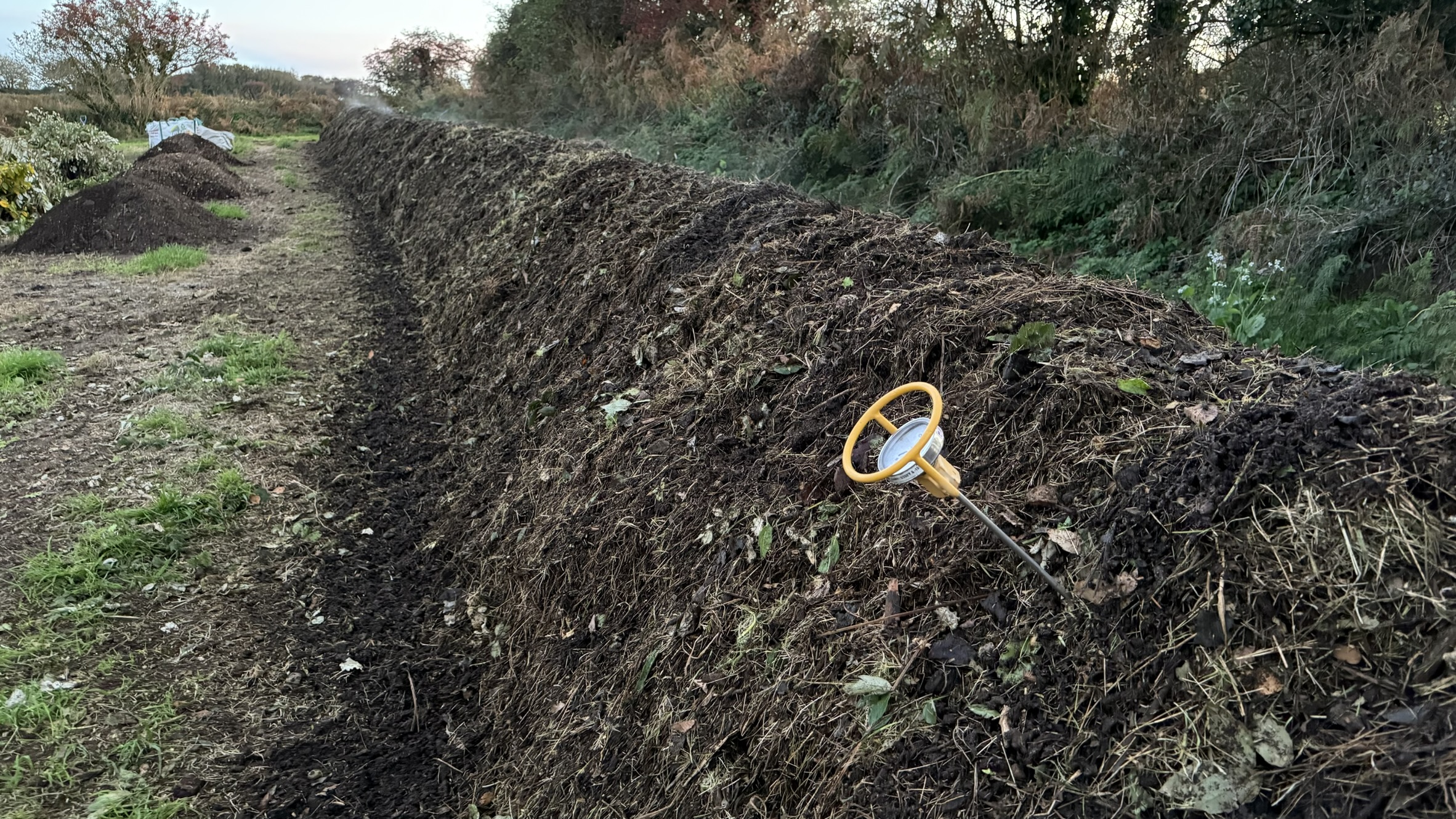
So we follow this through and for me, wether you choose to eat meat or fish, or follow a plant based diet, there is value in the combined application of farm animals and vegetable production and further, to operate at the scale necessary to feed all of us, in a sustainable way, we need booth systems in full flow. We need manure for compost, along with plant matter, in order to replenish the biology and fertilisers to create healthy soils to create healthy plants. If we put any of that healthy system under the microscope we will see plants, soil and animals all teeming with microscopic life that make nutrients soluble, from soil biology feeding plants to gut biology feeding us.
It is my view that farming plants and animals in balance with nature, and extracting only what we need, mitigating waste and utilising every part of plant and animal to its fullest potential, while putting back into the system more than we consume, which is the core tenet of regenerative farming, is a system that we should be voting for, all of us, despite the food choices we make. For me this means a veg:meat diet of around 70:30 or 80:20, with eggs and milk etc being the variable, but the whole being centred in welfare, biodiversity, land health, water quality and interconnected health of the community, including meat eaters and vegans co-existing side by side in harmony.
Discuss.
Jock – The Soil Farm